Choosing the best season for safari lodge can feel like a guessing game. Do you fight the dry-season crowds for near-guaranteed wildlife sightings, or gamble on the green season for lower rates and a very different experience? The truth is that the season you pick shapes almost everything: how many animals you’ll see, what you’ll pay, and even how comfortable your days at camp feel.
This guide breaks down how each season changes your safari lodge stay. We’ll compare dry-season game viewing with green-season value, where green-season rates typically run 30-50% lower than peak, and look at why shoulder months suit many travelers best. You’ll also find practical advice on booking windows, how a typical 3-4 night stay fits into each season, and how to match the season to your budget and expectations. By the end, you’ll know exactly which weeks belong to which season and which one fits your trip.
Why Season Matters More Than the Lodge Itself
Travelers often spend weeks comparing lodges, reading reviews and weighing tented camps against permanent suites, then pick their dates almost as an afterthought. That’s usually backwards. The same lodge, on the same deck, can deliver two completely different safaris depending on when you arrive. Visibility, animal behavior, crowd levels and even the mood of the landscape all shift with the seasons, sometimes dramatically.
What the dry season changes
In the dry months, water becomes scarce and wildlife concentrates around the sources that remain: rivers, permanent waterholes and the pans your lodge overlooks. That concentration is exactly what makes game viewing feel effortless. Animals gather in predictable places, so a morning spent on your lodge’s deck can produce as much action as a full-day drive, and vehicles rarely need to chase over large distances to find predators.
Crowds shift too. Dry season is when most travelers visit, so popular waterholes and sightings can draw several vehicles, and the lodge itself often runs at full occupancy with a busier, more social atmosphere.
What the green season changes
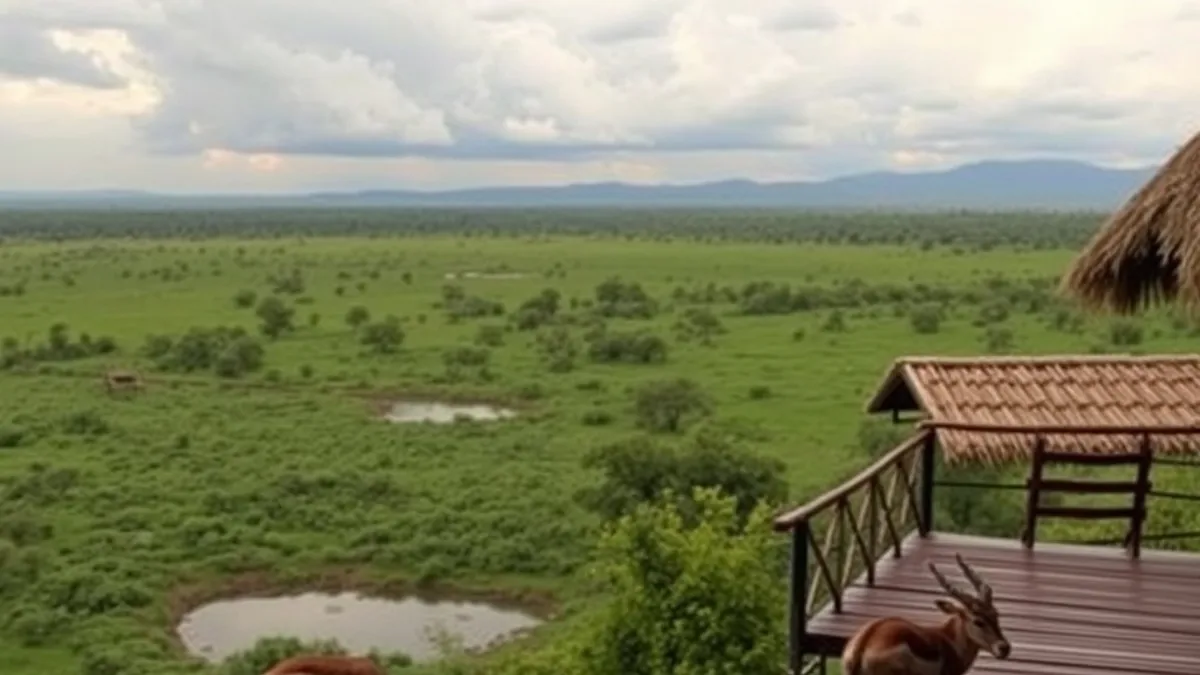
Green season flips the script. Rain transforms the bush into lush, emerald country, newborn animals appear almost everywhere, and migrant birds arrive in numbers that keep photographers and birders busy for days. The skies, with their towering clouds and dramatic light, are often the best you’ll ever photograph on safari.
The trade-off is simple: thicker vegetation hides wildlife. Tall grass and dense foliage give animals cover, so sightings take more patience and a sharper guide. Many travelers find this quieter, more intimate version of the bush just as rewarding, but it’s a genuinely different experience from the same room, same deck and same river below.
The practical takeaway: if you’re choosing between a better lodge in the wrong season and a good lodge in the right season, pick the season. A mid-tier camp in peak conditions will usually outperform a luxury camp when the bush is thick and the animals are scattered. Match your dates to what you actually want to see, then spend the savings, often 30-50% in green season, on extra nights instead of extra stars.
Dry Season: The Best Season for Safari Lodge Game Viewing
If you want the classic safari experience—animals gathered at waterholes, predators on the move, and clear views through thinning bush—the dry season is your window. In East Africa, that window runs from June to October. It also lines up with the Great Migration, when river crossings in the Mara typically happen between July and October. Watching wildebeest surge across a crocodile-filled river from a lodge deck or a game drive vehicle is one of the most sought-after sightings in Africa, and dry season is when your chances are best.
Southern Africa follows a similar rhythm, with its dry season running from May to October. As the months pass without rain, the bush grows sparse and waterholes shrink, drawing wildlife to predictable spots. This is when leopards draped over a branch or a lion pride stalking a pan become far easier to find, and why guides in reserves across the region count these months as their prime time.
What to Expect on the Ground
Days typically start cold—pack a fleece for early morning drives—then warm into dusty, rain-free afternoons. Skies stay clear, which photographers love, but the dust can be noticeable on unpaved roads. The trade-off for all this reliability is demand: dry season brings the highest occupancy and the highest rates of the year at most lodges.
This season suits first-time safari-goers who want dependable sightings of the Big Five, and photographers who need light, visibility and concentrated wildlife to justify the trip. If you fall into either camp, the extra cost is usually worth it—just remember to book well ahead, as the best camps fill up fast.
Green Season: Value, Baby Animals and Fewer Vehicles
The green season, running November to May in East Africa, is when safari lodges quietly offer their best value. With rates dropping well below peak-season prices, you could stay at a camp that would normally stretch your budget for a fraction of the cost. For the same money, you might add an extra night or upgrade your room category.
It is also the season of new life. Calving in the Serengeti peaks from January to February, when thousands of wildebeest and zebra give birth on the short-grass plains. Predators are never far behind, so sightings of lions and cheetahs with young cubs are common. Beyond the big names, you will spot newborn impala, giraffe calves and playful elephant babies across many parks.
Why Photographers and Birders Love It
Landscapes turn lush and emerald after the rains, with dramatic cloud formations that make for striking photos. Birdlife is at its richest, too, as migratory species from Europe and Asia arrive and resident birds display their breeding plumage. If birds are your thing, the green season is hard to beat.
The Trade-Offs to Know Before You Book
Afternoon thunderstorms are part of the deal, usually passing within a couple of hours. Taller grass and thicker bush can make animals harder to find, so game drives require more patience and a good guide. In the wettest months, some lodges close entirely or run a reduced service, so check your camp’s operating calendar before committing.
The green season suits repeat visitors who have already done a classic dry-season safari, keen birders, and budget-conscious travelers who value scenery and savings over guaranteed sightings. If that sounds like you, start comparing camps a few months ahead of your dates to make the most of the lower rates.
Shoulder Months: The Sweet Spot for Many Lodges
If you want a compromise between peak-season game viewing and green-season value, the shoulder months deserve a close look. In many safari regions, June and the period from late October into November combine decent visibility with noticeably lower rates and fewer vehicles at sightings. The bush has usually dried out enough for spotting animals, but the peak crowds of July through September have not yet arrived, or have already gone home.
Weather in the shoulder months sits somewhere in the middle. You can expect some rain, often in short afternoon bursts rather than all-day downpours, and game drives generally remain productive. Vegetation may be slightly thicker than in the height of the dry season, but guides still find plenty, and the landscapes often look greener and more photogenic than the dusty end of the dry months.
Availability and rates in the shoulder season
Securing a room is typically easier than locking down peak dates, and some lodges offer shoulder-season pricing that sits well below their high-season rates. That said, popular camps still fill early, especially small properties with a handful of rooms. If you have your heart set on a specific lodge, treat a shoulder-month trip almost as seriously as a peak-season one and enquire well in advance rather than assuming space will be waiting.
For travelers who want good sightings without paying top dollar or sharing every lion sighting with a line of vehicles, the shoulder months often deliver the best overall balance. Check with your chosen lodge about exact seasonal rates and whether any facilities change between seasons.
How Far Ahead to Book Your Safari Lodge
Booking windows matter more on safari than at almost any other type of hotel. The most sought-after camps are small by design, and many of the best lodges have fewer than 20 rooms. When a camp has only a dozen suites and the dry-season demand is intense, those rooms can sell out close to a year in advance.
For peak dry-season dates, aim to book 9-12 months ahead. This is especially true for small, high-demand camps, and for anyone traveling in a group or with children, where adjacent rooms are harder to secure. If you wait until a few months out, expect to be choosing between your third-choice lodge or an awkward routing.
Green-season stays are far more forgiving. Booking 3-6 months ahead usually gives you plenty of choice, and rates often have more flexibility since lodges are working to fill rooms. Last-minute deals do appear in the wetter months, though you should not count on one for a specific camp.
It also pays to think about length of stay. Longer bookings of 3-4 nights often unlock better per-night pricing than one- or two-night bookings, and many lodges reward longer stays with reduced rates or added extras. A typical safari lodge stay already runs 3-4 nights, so this works in your favor.
Before you commit, keep these practical points in mind:
- Ask about long-stay and combination deals. Some operators discount rates if you split 3-4 nights between two camps in the same concession or reserve.
- Use a deposit structure to your advantage. Booking far ahead usually means a smaller deposit now and the balance closer to travel, which eases cash flow for a big trip.
- Reconfirm rates before paying. Lodge prices and park fees change regularly, so always verify current rates and terms with the lodge or your operator.
- Check single-supplement and child policies early. These vary widely between camps and can shift the math on a long stay more than the nightly rate itself.
Matching the Season to Your Budget and Expectations
Price is often the deciding factor, and it is a big one. Peak-season lodge rates often range from $500 to $1,500+ per person per night, so shifting your dates by a few weeks can cut costs dramatically. The same tented suite that commands top dollar in August may cost far less during green season, sometimes with added perks like private vehicles or discounted longer stays.
Priorities: Wildlife or Value?
If wildlife density is your priority, pay for the dry season. Sparse vegetation and animals gathering at water sources make sightings more reliable, which matters most on a first safari or a short trip of the typical 3-4 nights. If scenery and value matter more, choose green season: lush landscapes, dramatic skies, newborn animals and quieter camps, all at a lower price.
Also weigh health and comfort. Green season is warmer and wetter, which can mean higher malaria risk in many safari regions and the need for rain gear and patience with afternoon storms. Dry season offers cooler, clearer days, though mornings on open vehicles can be genuinely cold, so pack layers.
Check the Lodge Calendar Before You Commit
Not every camp operates all year. Some lodges, especially remote or seasonal camps, close during the wettest weeks or reduce service levels, so a tempting green-season rate may come with limited activities or a shorter menu of experiences. Before booking, confirm whether your chosen lodge operates year-round, and ask what changes during the low season: game drive routes, boat access or dining arrangements can all differ from the brochure description.
Wrapping Up: Picking Your Perfect Safari Lodge Season
There is no single best season to stay in a safari lodge—there is only the best season for you. Dry season (May to October in the south, June to October in the east) delivers the easiest game viewing, cooler mornings and the most reliable sightings, but you will pay peak rates and share waterholes with plenty of other vehicles. Green season trades some visibility for real value: 30-50% savings on rates, newborn animals, superb birding and dramatic skies, with the trade-off of taller grass and afternoon storms.
If you want the best balance of price, availability and experience, aim for the shoulder months. And if peak dates at a small camp are non-negotiable, be ready to commit 9-12 months ahead—those rooms go fast. Match the season to your priorities, whether that is wildlife density, budget or scenery, and your lodge stay will reward you either way. Have a favorite safari season? Share your pick in the comments or pass this article along to a fellow traveler.