Glamping sites often charge similar nightly rates for three very different structures, and that’s where the safari tents vs yurts vs domes question gets tricky. Pick the wrong one and a stay that costs €150-400 a night can feel cramped, cold or underwhelming, turning a treat into a disappointment. The differences go beyond looks: each structure handles space, weather and seasons in its own way.
This guide breaks down how the three structures actually differ, how comfort and space compare, and when each stay type works through the year. We’ll also look at what each option typically costs per night, share tips on how to book the right glamping stay, and help you figure out which structure suits which traveler. By the end, you’ll know exactly which one matches your trip, your budget and the people you’re traveling with.
Safari Tents vs Yurts vs Domes: How the Three Structures Differ
At first glance, safari tents, yurts and domes all promise the same thing: a real bed in the middle of nature. But the structures themselves are very different, and those differences shape everything from how much space you get to how the stay feels.
Safari tents
Safari tents are large canvas structures stretched over a fixed frame, usually raised on a wooden deck. The classic setup comes from African lodge-style camping, and most European versions follow it: full-size beds, proper furniture, often a kitchenette or lounge area, and frequently a private bathroom built into the deck. They are the closest of the three to a furnished cottage that happens to have canvas walls.
Yurts and domes
Yurts are round, tent-like dwellings inspired by the portable homes of Central Asian nomads. A traditional yurt uses canvas or felt over a lattice frame, with a central dome skylight at the top that lets in daylight and lets warm air escape. The circular layout gives the room a soft, cocoon-like feel, and most modern glamping yurts add wooden floors, real beds and a small seating area.
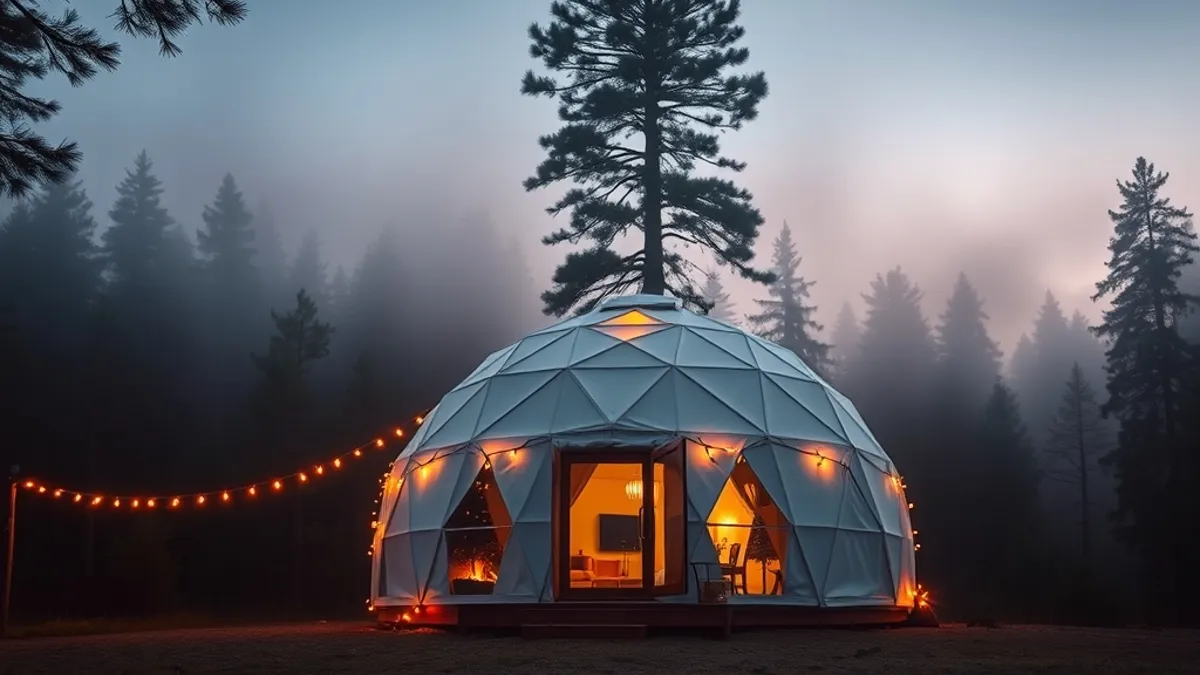
Geodesic domes look the most futuristic of the three. They are built from triangular panels of insulated fabric or polycarbonate, forming a spherical shape that is structurally strong and often paired with large panoramic windows. Many dome sites position them specifically for the view or for stargazing through the clear panels above the bed.
What all three share is that none of them involve a sleeping bag or an air mattress. Real beds, heating or cooling of some kind, lighting and proper furniture are standard, which is exactly what separates glamping from traditional camping.
Comfort and Space Compared
Space is where safari tents pull clearly ahead. A typical safari tent offers 40-70 m² of floor area, often split into separate bedrooms, a proper lounge, and sometimes even a kitchen corner. You can stand up and walk around without bumping into anyone, which makes a real difference on a week-long stay with kids.
Yurts sit in the middle. Their single round room of roughly 20-40 m² feels surprisingly open thanks to the circular layout and central skylight, but there are no internal walls, so everything from the bed to the luggage lives in one shared space. They suit couples well and can work for small families who don’t mind being close together.
Domes are the most compact of the three, usually between 15-30 m². The design prioritizes panoramic windows and atmosphere over storage and privacy, so expect limited cupboard space and a more studio-style layout. For a two- or three-night romantic stay, that trade-off is often easy to accept.
- Bathrooms: safari tents usually have the largest bathrooms, sometimes with a full bathtub, while domes and yurts often come with compact en-suites or rely on shared facilities.
- Furniture volume: because safari tents span 40-70 m², they can fit sofas, dining tables, and wardrobes that smaller structures simply can’t accommodate.
- Overnight logistics: in a yurt or dome, packing for a family means living out of suitcases on the floor, whereas a safari tent’s separate rooms let you store bags out of sight.
- Privacy between travelers: parents in a safari tent can close a bedroom door at bedtime; in a yurt, everyone shares the same room until everyone is asleep.
Seasons and Weather: When Each Stay Type Works
Weather is the factor that separates these three stay types most clearly. Safari tents are made of canvas, which means most European sites only operate during the warmer months. In practice, the safari tent season in most of Europe runs roughly April to October, so if you are dreaming of a canvas stay, plan your trip within that window and check the exact dates with your chosen site.
Yurts and domes are a different story. When they come with insulated covers, both structures often operate year-round, including winter. That means you can book a snowy stay with the heating on, watch snow fall from inside a warm dome, or enjoy a frosty morning in a yurt with a cup of coffee in hand. If a winter escape is on your list, insulated yurts and domes are the realistic options.
How each structure handles wind, rain and heat
Geodesic domes have a clear advantage in rough weather. Their aerodynamic shape lets wind flow around them, which makes them the best performers in wind and rain among the three. Canvas structures, by contrast, can drum loudly during storms, and light sleepers sometimes find heavy rain on a tent roof disruptive. Packing earplugs is a simple fix worth remembering.
Summer brings the opposite challenge, especially for domes. Their curved, often transparent panels can trap heat, and a dome without air conditioning or shading can get uncomfortably warm in July and August. Before booking a midsummer dome stay, ask the site about cooling options, shading or ventilation. Safari tents and yurts generally breathe better in hot weather, though a shaded pitch still makes a noticeable difference.
What Each Option Costs per Night
Glamping prices vary a lot by structure, and knowing the typical ranges helps you spot a genuine deal. Safari tents sit at the top of the mid-range: in high season, expect roughly €150-350 per night, which reflects their size, private bathrooms and full kitchens or lounge areas. Yurts are usually the friendliest option for your wallet, typically €100-250 per night. Domes command a premium, around €180-400 per night, largely because of their design appeal and those panoramic windows.
Timing matters just as much as structure. If you can travel outside the July and August rush, shoulder-season rates in May, June and September often drop 20-40% below peak prices. That can turn a dome that felt out of reach in August into a realistic choice in early June, or let a family of four afford a larger safari tent than they could at peak rates.
A few practical points to keep in mind when comparing prices:
- Per-person math changes the picture: a yurt sleeping up to five guests at €200 per night can work out cheaper per person than a dome for two at €180, so divide rates by your group size before deciding.
- Weekday nights are often cheaper: many sites price midweek stays noticeably below Friday and Saturday, so a Sunday-to-Thursday booking can trim a chunk off your total.
- Check what the rate actually includes: some prices cover linens, firewood and cleaning, while others add these as extras, which can shift a “cheap” yurt above a safari tent in real cost.
- Minimum-stay rules are common in peak weeks: some sites require two or three nights during high season, which affects whether a short shoulder-season trip offers better value overall.
Always confirm current rates directly with the site, since glamping prices shift with demand and new sites open every year.
How to Book the Right Glamping Stay
Booking a glamping stay is straightforward, but the details you confirm before paying make the difference between a great trip and a disappointing one. Because many sites are small operations with only a handful of units, availability can vanish quickly in summer, and the finer points of comfort vary from one site to the next. Unlike a large hotel chain, there is rarely a standard checklist you can rely on, so it pays to ask questions directly. A few minutes of checking saves a lot of hassle later.
- Book early for July and August. Top glamping sites often have fewer than ten units in total, so peak-season weeks sell out first. Aim to reserve your stay 3-6 months ahead if you want a specific site or date in the height of summer, and check cancellation terms before committing. Some small operators also ask for a deposit rather than full payment upfront, so clarify how and when the balance is due.
- Check the bathroom situation. Some safari tents come with a private en-suite bathroom, while many yurts rely on shared facilities a short walk away. If having your own toilet and shower matters to you, ask the site directly before booking rather than assuming. Also ask how far the shared block is from your unit, since a midnight walk across a muddy field loses its charm fast.
- Confirm heating, cooling and Wi-Fi. Standards vary widely between sites, and “heating available” can mean anything from a proper stove to a small portable heater. Ask what exactly is provided, whether Wi-Fi is included or limited to a common area, and what cooling exists for hot summer nights. If you plan to work during your trip, ask about mobile signal strength too.
- Read recent reviews about weather. Look for comments from guests who stayed in rain or wind. Canvas noise during storms and condensation on cold mornings are common complaints, so recent reviews give you a realistic picture of what a wet night actually feels like in that particular unit. Photos on the site’s own page rarely show this side of things.
Finally, keep a short list of your non-negotiables, whether that is a private bathroom, reliable heating or a quiet location away from the main road. Send the site a quick message with your questions before you book. Small operators usually reply personally, and their answers tell you a lot about how well the stay is run. A site that answers promptly and clearly before you pay will generally look after you just as well once you arrive, so treat slow or vague replies as a warning sign worth taking seriously.
Which Structure Suits Which Traveler
Choosing between a safari tent, yurt and dome comes down to who is traveling with you and what you want from the stay. Each structure has a clear winning traveler profile, and matching yours to the right one saves you from paying for features you will never use.
Families generally get the most out of a safari tent. With room for 2-6 guests, separate sleeping areas and the most home-like amenities of the three, parents get privacy while kids get their own space. Most safari tent sites in Europe operate roughly April to October, which suits school holiday timing well anyway.
Couples chasing romance should look hard at domes. Sleeping 2-4 guests, their panoramic windows turn a sunrise or a starry sky into the main event of the stay. Yes, they cost more per night, but for a special occasion the view often justifies it.
Yurts suit budget travelers and anyone drawn to a cozy, cocoon-like feel. The round layout and soft canvas walls create an intimate atmosphere that fits 2-5 guests, and they are typically the cheapest of the three options.
Winter travelers should keep it simple: insulated yurts and domes are the realistic choices. Safari tents in most of Europe close for the cold months, so a snowy getaway means going round or going spherical.
- Safari tent families: look for two-bedroom layouts, since mom and dad get a real door between them and the kids at bedtime.
- Romance-seeking dome couples: ask whether the bed faces the window, as some sites position sleeping areas specifically for stargazing.
- Yurt travelers on a budget: the single round room works best for couples or one or two children rather than a large family.
- Winter guests: confirm the insulated cover before booking, since not every yurt or dome listing stays open in snow.
Final Thoughts on Choosing Your Glamping Stay
So which one should you book? If space and full amenities matter most, a safari tent is the clear winner, especially for families. If you want cosiness at the friendliest price, a yurt fits the bill. And if panoramic views and year-round use top your list, a dome is hard to beat. None of them is objectively better; each simply suits a different kind of trip.
Before you spend anywhere from €100 to €400 a night, match the structure to your season, budget and group size. A summer family trip calls for something very different from a snowy weekend for two, and the wrong pick can turn an expensive stay into a disappointment. Choose with those three factors in mind, and your glamping night should live up to the price tag. If this helped you decide, leave a comment or share the article with a fellow traveler.